Michael PantaleoneMEP electrical designer, building workflow tools for MEP firms
Your designers bill $120 an hour and lose a good part of every week to submittals, RFIs and PDFs.
I spent three years designing hospital MEP systems and built the tools I wished I'd had. I'm offering them to one or two small MEP firms first, at a founding rate, in exchange for an honest before-and-after.
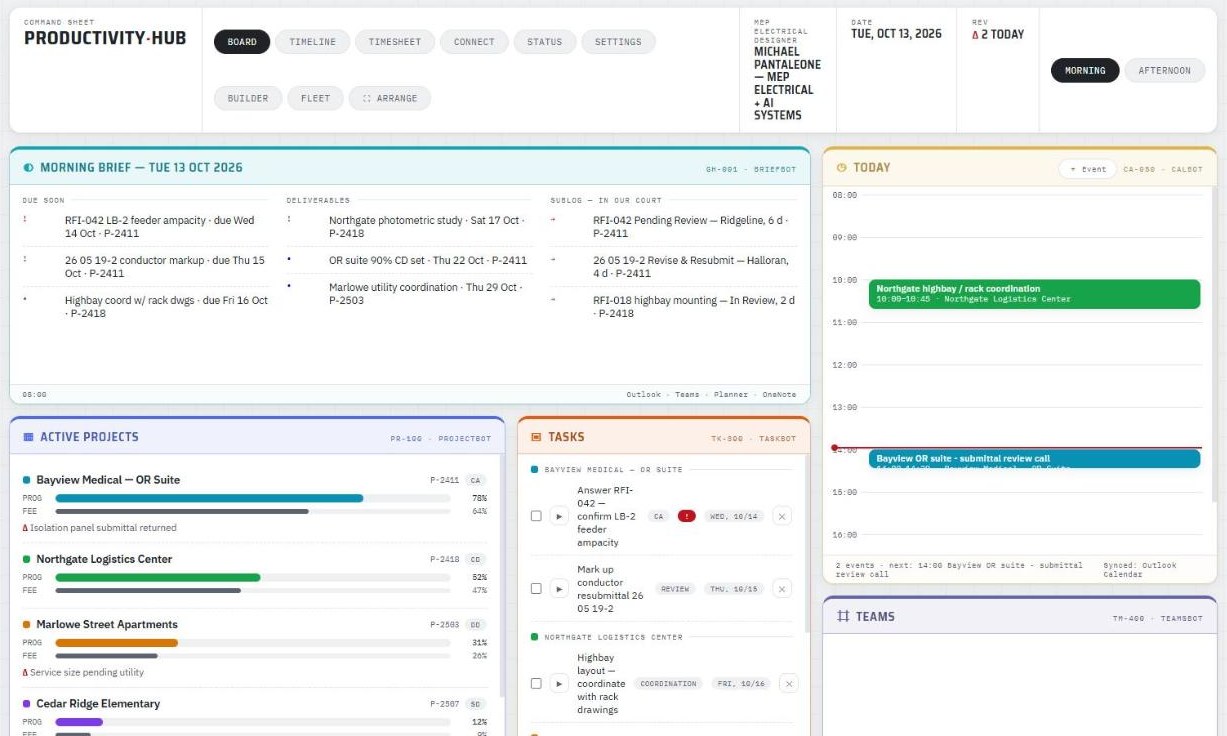
The daily board in demo mode. Every project, person and email on it is sample data.
What I can show you on a screen-share
Each tool below works today. Next to what it does is what it doesn't do yet, written the way you'd mark up a shop drawing. If something on this page isn't true when you try it, I'd want to know.
Submittal and RFI ball-in-court board
What it does
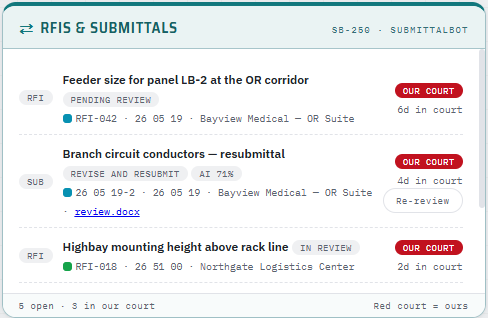
One row per submittal or RFI: whose court it's in and how many days it has sat.
Picks up the CSI section and the review status, such as "approved as noted" or "revise and resubmit".
One click runs a first-pass check of the attached package against the governing spec section and writes a .docx checklist of which requirements are evidenced and which aren't.
Hand it a whole project manual and it narrows to the section the submittal cites. Check a package against the wrong section and it says so.
Exceptions taken
The check looks for evidence of each requirement. It doesn't judge it. Your engineer makes the call.
Scanned packages with no text layer are reported as unreadable. There is no OCR yet.
The live mailbox connection runs on Microsoft 365. The demo uses sample email.
Drawing-set compare
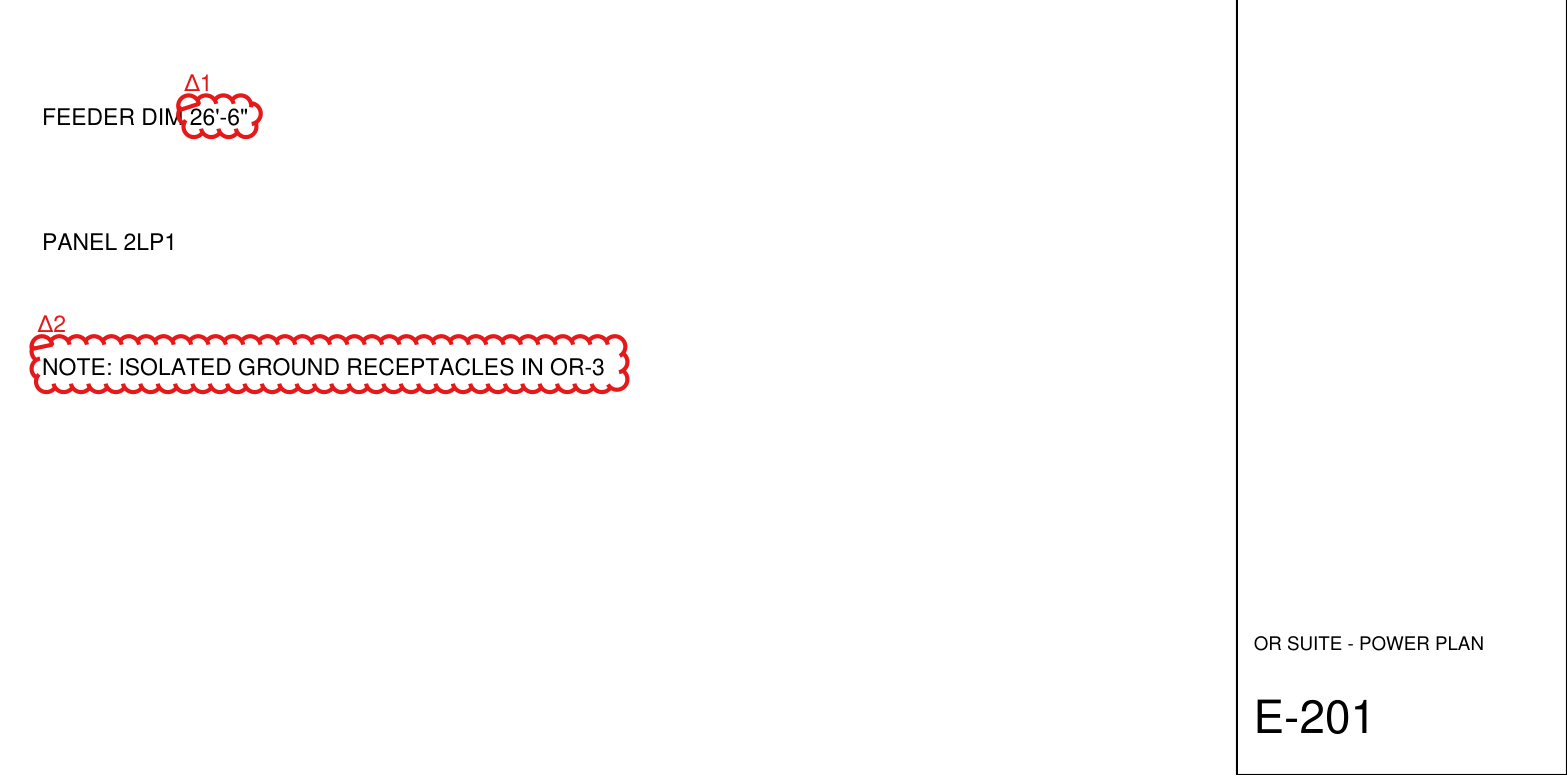
A sample sheet. Rev 3 against rev 2, both clouds placed by the tool.
What it does
Pairs the sheets of two issues, finds the ones that changed and clouds each change as an editable markup.
Tested on a real nine-sheet set with one sheet revised: it flagged exactly that sheet, in about 20 seconds.
Exceptions taken
Works on PDF sets issued from CAD. Scanned or rotated sets don't pair reliably yet.
PDF to editable DXF
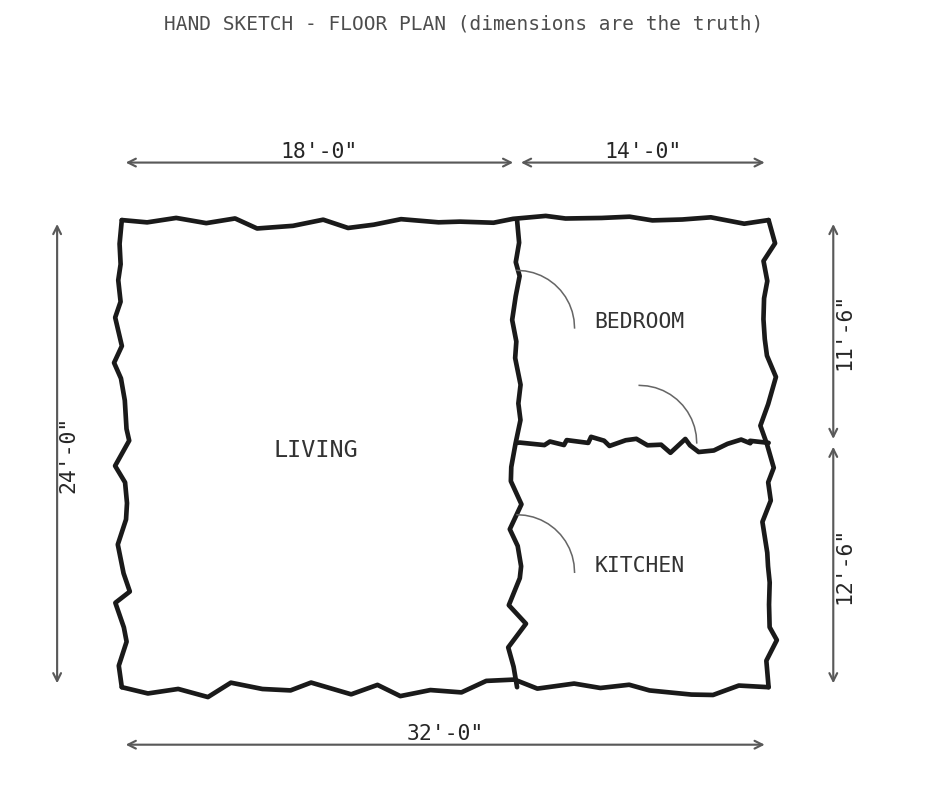
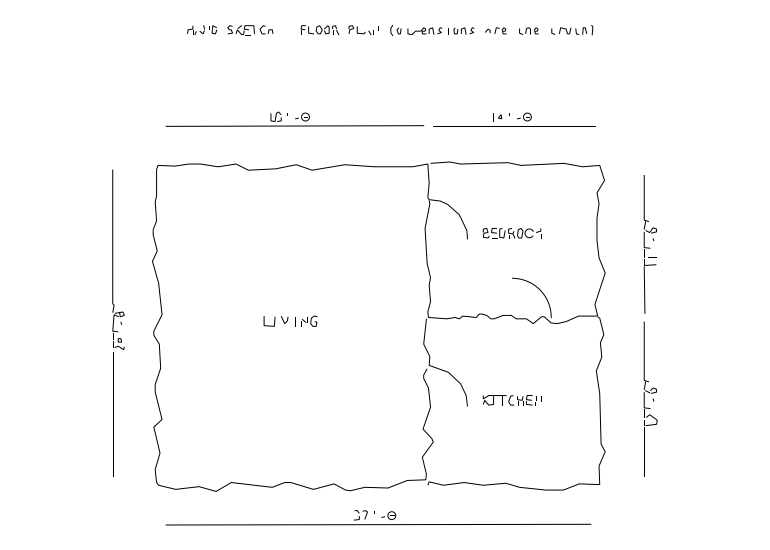
In: a sample raster sketch.Out: DXF linework, rendered.
What it does
Vector PDFs come across as AutoCAD DXF with linework, text and drawing scale. A real A3 floor plan came out at the correct 1:25.
Scans come out as a linework trace you clean up, instead of redrawing existing conditions from scratch.
Exceptions taken
A scan's output has no scale and no live text. Lettering is traced as strokes.
A dense sheet takes minutes, so I convert ahead of a call rather than live.
About 750 automated tests run across these tools. All three suites passed on 13 October 2026.
How we'd work together
Try one tool
One automation set up on one live project, such as the ball-in-court board. $250 to $750.
Two-week assessment
I interview you and two or three of your people, map where the hours go, and hand you a written plan ranked by return, using your rates. $4,000 to $5,000.
Build
I build and install the top item from the plan, at a fixed price agreed up front. Typically $15,000 to $40,000 over about 60 days.
Upkeep
Optional monthly support and improvements. $1,000 to $3,000 a month.
Founding-firm offer
For the first one or two firms, the assessment is $1,500 to $2,000 instead of $4,000 to $5,000. In return I ask for honest feedback and, if it works, permission to write up the before-and-after as a case study. If two weeks of looking doesn't turn up anything worth automating, the report will say so.
I'm an MEP electrical designer with an engineering degree and three years of hospital MEP design. I build software in my own time, and I work with small and mid-size MEP firms that don't have an innovation team of their own.
This is workflow software and consulting, not engineering services. I am not a licensed professional engineer, and nothing I deliver is stamped, sealed or a design or code-compliance sign-off.
Privacy
This page sets no cookies, runs no analytics and loads nothing from other sites. It is hosted on Cloudflare Pages, which keeps standard server logs. The booking button opens a scheduling page run by its provider, under that provider's privacy policy. If you email me, I use your message only to reply and keep it in my Gmail. Ask me to delete it and I will.
Demos use sample data only. When we work together, your files live either on your own machines or in a separate Azure environment run for your firm alone, never in a database shared with other clients. Drawings and attachments are never sent to an AI model. If you turn on the AI features, email text goes to Anthropic's Claude API under its commercial terms, which do not allow training on it, and I'll name each of those features before you turn it on.